
Metaphorical cards for self-esteem
Self-esteem rarely gets fixed by persuasion: «you are doing fine» does not work because it argues with the wrong layer. It is more useful to look at what the image of yourself is made of and where the gap between its parts sits. The practice below lays that out in three cards in fifteen minutes.
Why «just believe in yourself» does not land
The image of yourself is not one thing: there is the version you show people, the version only you know, and the version you are drawn to. A self-esteem problem usually lives not inside one of them but in the distance between them. Persuasion is addressed to the first one and never reaches the rest.
Second: low self-esteem often rests on comparison, and comparison is rigged. You match your inside, doubts included, against someone else's outside, where doubts are invisible. Arguing about it with yourself runs into knowing all the arguments in advance.
Cards get around both: an image neither argues nor praises. It hands you material in which you notice which part of yourself is pushed out and where it is not allowed. That does not lift self-esteem in one evening, but it makes the conversation concrete.
Fifteen minutes: three layers
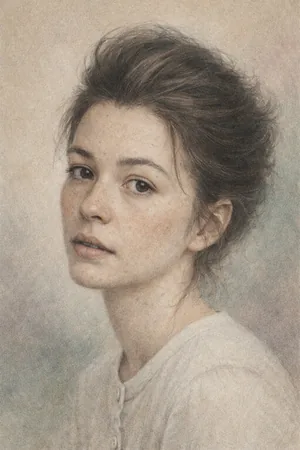
This is the Masks layout: three cards in a row, all picked with your eyes. Do not look for something dramatic here: the hidden part is usually just quieter, not darker.
-
1
How people know me
The first card. Not pretence, but the version you usually show. The question for it: who needs this version, and what for.
-
2
Who I actually am
The second card: what you know about yourself and usually do not show. Ask what stops you from showing it more often, and where it already appears.
-
3
Who I would like to be
The third card. Not an ideal built from other people's expectations, but the image that pulls you. A good question: what of it is already in me, even a little.
-
4
Compare the distances
What is useful is not the individual cards but the gaps. Where the gap is widest is where the daily tension sits.
-
5
One step towards closing it
Not changing your life, but finding one place where the second card can show up in public: a conversation where you say it as it is, a task done your own way.
The full technique is Masks: public, hidden, aspired (3 cards, 15 minutes). For a wider look, including what others say about you, take the Johari window with its four quadrants.
Which deck to take
Reflection
103 cards with images of people: a face deck sits exactly on identity work, and it has a words group for naming a layer. See the Reflection deck.
The Open Door
90 picture cards with more narrative images. Take it if faces feel like too much today. See the The Open Door deck.
Urban Myth
108 scenes of modern life: helps you see yourself in a context rather than in a vacuum. See the Urban Myth deck.


When to postpone this practice
If it is hard to look at yourself without judgement right now, the layout will show the gap between the layers, and in that state a gap reads as a verdict. Start with something gentle: Safe Place or Resource state.
A card does not measure self-esteem and does not diagnose a personality disorder. No picture says more about you than you said about yourself.
If the sense that «something is wrong with me» has lasted for months and gets in the way of relationships and work, it is not a topic for a self-guided practice. Therapy helps there; cards go alongside.
With thoughts of harming yourself, reach a helpline now: 988 (US) or 116 123 (UK). More on limits: safety of working with cards.
FAQ
Do cards help with self-esteem?
Is this a personality test?
What if the second card is unpleasant?
How often should I repeat it?
Open the 15-minute practice
Next: all techniques, layouts by card count, limits of the method.